“Graduating” from Vanillaware: To Make Something Small, Without the Brand on His Back
Tell us about how you came to leave Vanillaware, too.
Nishimura:
The trigger was the COVID-19 pandemic. As a company, a movement formed to permit remote work. I was, in part, the one who built that system.
It pained me to see staff who’d caught COVID and couldn’t come in burning through their paid leave, so I tried to set up a remote-work framework.
I see — so COVID was the trigger.
Nishimura:
But once we’d started, I found myself wanting to use that system. Working without being tied to a place had been a dream of mine to begin with.
On top of that, as COVID grew worse, I had a certain unease — that living in a big city, if the lifelines were ever cut, I might not be able to save myself or anyone else.
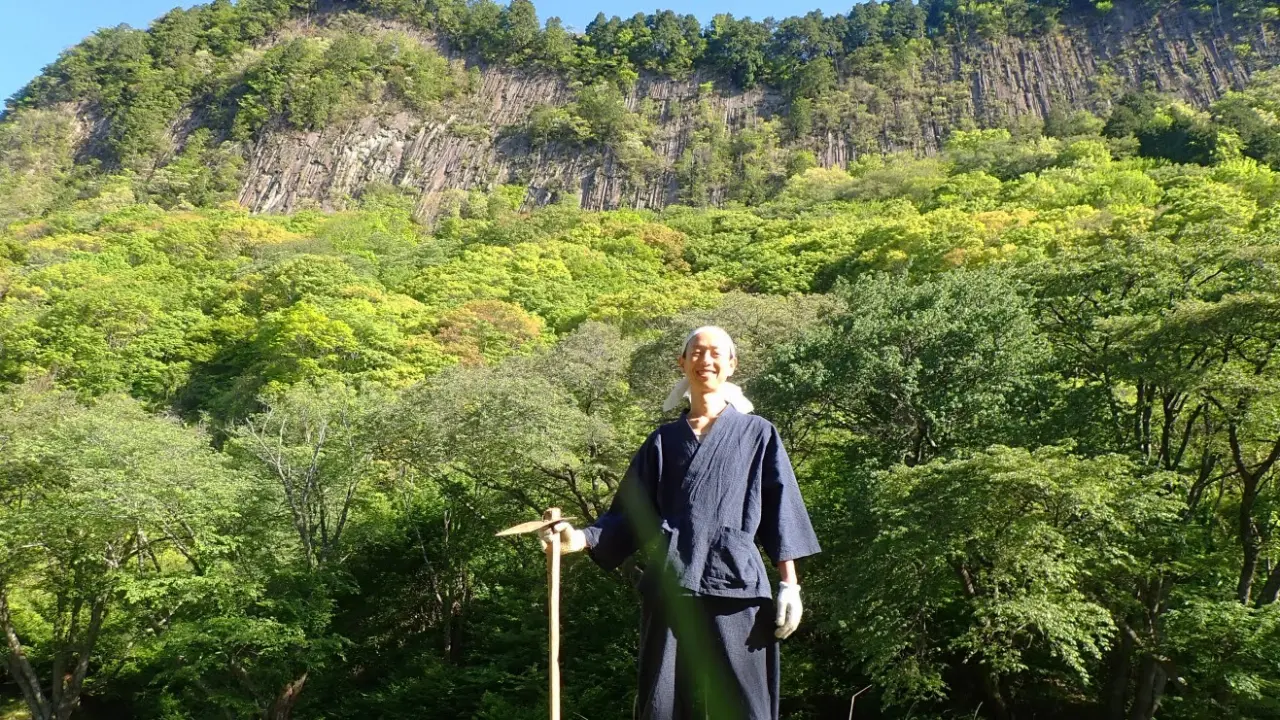
I wasn’t married yet at the time, but my wife — as she is now — and I talked about “going somewhere,” and we ended up coming to Soni Village.
So you were working remotely from there, but your life and the company’s policy stopped lining up.
Nishimura:
Yes. As COVID settled down, the company’s stance became “we’d like you to come in to some degree.” But I was in Soni Village, far from Osaka. I couldn’t get there. It no longer fit the company’s policy, so I came to leave.
That said, it wasn’t that I wanted to quit Vanillaware, nor that Kamitani wanted to let me go. My life had simply changed, and our lifestyles purely stopped matching up.
The path from there to Witch of the Dark Castle is quite unusual, isn’t it? Even though you’d left Vanillaware, I hear you have Kamitani’s — Vanillaware’s — support as well.
Nishimura:
To begin with, I’d been making it as a hobby even before I left. At home, little by little, I was building the scenario and the graphic resources. I think I worked on it for about three years.
Kamitani had long been mulling over a problem: “If you carry the name Vanillaware, you have to make something correspondingly big.”
So, he thought, if you made a small-scale title under a different name — not Vanillaware — perhaps that’s how a director could come into their own. He’d been sharing that kind of thinking with me, too.
So Kamitani, for his part, carried a sense of the problem: how should new games be made?
Nishimura:
Yes. And at that point, I showed him: “Well, this is the kind of thing I’m making at home. Please let me make this.” And he said, “Sure.” For me, the true story is that I came to be allowed to make it as a kind of graduation.
This word “graduation” is quite important. Rather than making the creator carry the Vanillaware brand, the maker steps out, starts small, and builds at their own size. It’s close to a ramen shop granting an apprentice their own branch.
Nishimura:
That’s right. I think Kamitani has the idea that he’d like to see it spread — older people inside the company stepping away to some degree and making the things they themselves want to make. I’m riding along with that.
Why a Gamebook? The Origins of Witch of the Dark Castle
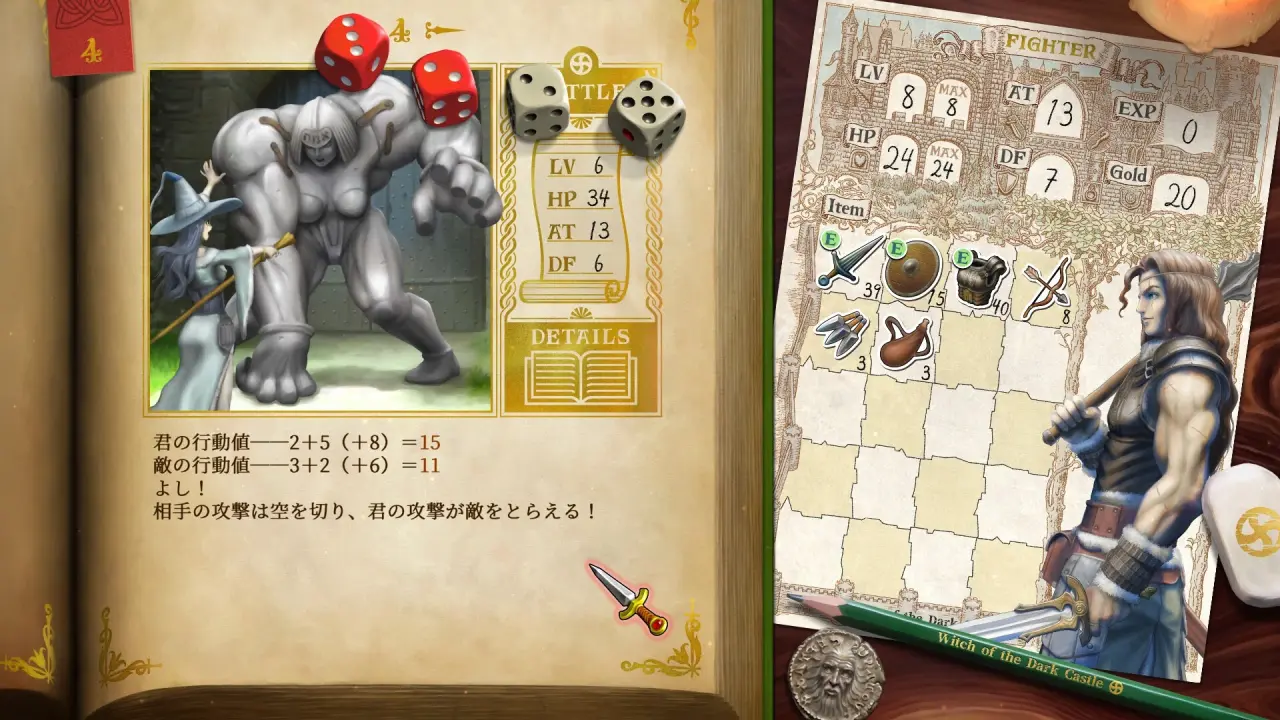
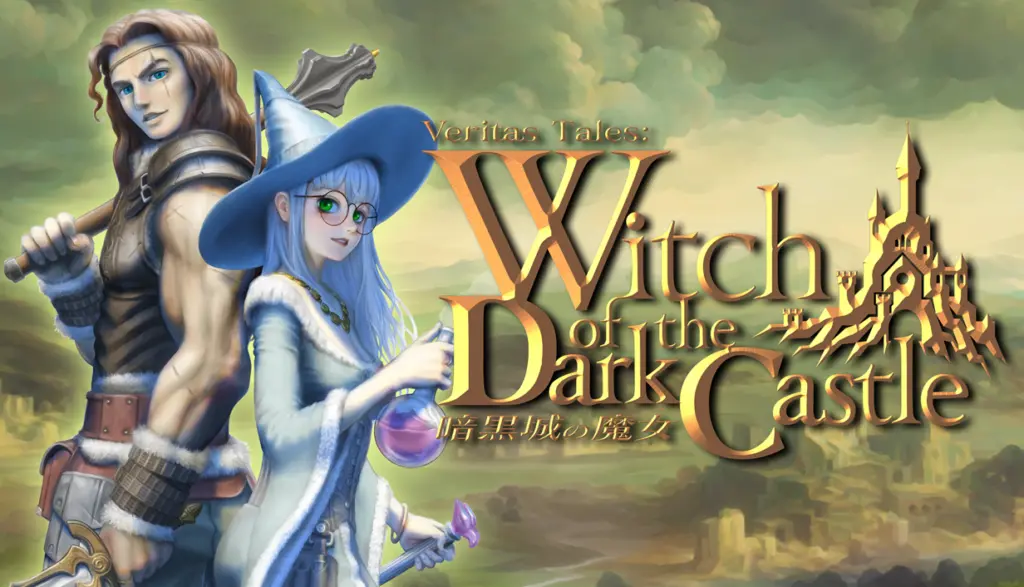
So, once more: tell us what kind of work Witch of the Dark Castle is, and why you wanted to make it.
Nishimura:
For me, gamebooks were what introduced me to the genre of fantasy in childhood.
Back then, I wasn’t very good at reading. I don’t think it was anything as serious as dyslexia, but reading books was hard for me.
Wait — you loved gamebooks, but you weren’t good at reading books?
Nishimura:
That’s right (he laughs ruefully).
But through gamebooks, I gradually became able to read. I learned words, I copied the illustrations and got better at drawing. There was a lot I gained from gamebooks as knowledge, too. So I have this feeling of wanting to thank gamebooks — to repay the debt.
Repay the debt.
Nishimura:
Compared to back then, gamebooks have cooled off quite a bit. There are still people making them, so I don’t think it’s gone so far as to have “died out,” but it’s not as common as it once was. So I want to get it going again.
For instance, every time some IP comes out, a gamebook comes out too. A Demon Slayer gamebook, a Jujutsu Kaisen gamebook — I want to create a situation where that’s taken for granted.
But just doing that with books wouldn’t make much use of my skills or knowledge. So I thought I’d make use of the form of a game.
I see.
Nishimura:
Even someone who isn’t good at reading might be able to play if there’s music, if there are effects, if the pictures move. And for people who play games, it might become a gateway into the habit of reading. With that kind of approach, I want to broaden gamebooks a little more.
In terms of gamebooks that influenced you, which ones are we talking about?
Nishimura:
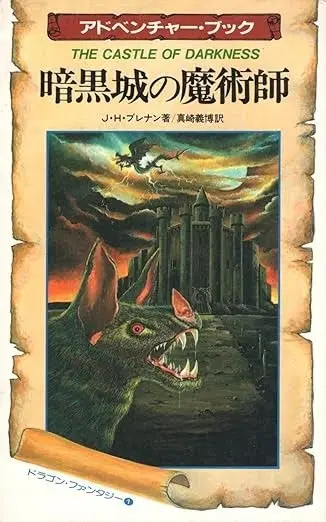
The biggest is J. H. Brennan’s The Castle of Darkness — the GrailQuest series.
(J. H. Brennan — an Irish gamebook author. His best-known work, the GrailQuest series, was a humor-filled take on the Arthurian legends that won worldwide popularity in the 1980s. The Castle of Darkness (1984) is its first volume; in Japan it was published as Ankokujō no Majutsushi, “The Sorcerer of the Dark Castle.”)
Its Japanese title — Ankokujō no Majutsushi, “The Sorcerer of the Dark Castle” — even ties directly into Witch of the Dark Castle. After that came Sorcery! and Fighting Fantasy. From gamebooks, my interest spread toward tabletop RPGs as well.
(Sorcery! and Fighting Fantasy — a British gamebook series launched by Steve Jackson and Ian Livingstone. Fighting Fantasy drove the worldwide gamebook boom, and Sorcery! was born from it as a spin-off. Many translated editions were published in Japan, and the series came to symbolize the gamebook culture of the 1980s.)
What do you think is the fundamental appeal of gamebooks? These days, there’s a sense that the same kind of essence carries over into games like Elden Ring, too.
Nishimura:
It comes down, I think, to “understanding a situation and making a choice.” For human beings, these two things are tremendously important.
As long as we’re alive, we face problems every day.
I’m hungry; where should I go; what should I do. People look at a situation and judge. Even walking is, in fact, a choice. You walk because you want to go to the bathroom. You reach out because you want something on the shelf. It looks almost like moving on instinct, but you’re actually choosing.
A gamebook pares that down to something extremely simple. Understand the situation, make the choice. You concentrate on that alone. That, I think, is where its primitive appeal lies.
Why You Die So Quickly in Gamebooks
This was true of the old gamebooks, and it’s true of Witch of the Dark Castle too — you die pretty quickly, don’t you? Why is that necessary?
Nishimura:
It’s not that I’m trying to say you can never see what’s coming, but I think it expresses how a choice changes the future. Dying is an extreme outcome, in game terms.
In the real world, choices don’t come with a clear right or wrong answer. But in a game, you can put it in the form of “choose this and you’re right,” “choose this and you’re wrong.” And through that, the weight of a choice becomes visible.
So the difficulty is also a kind of spice — a way to make people feel the fun of choosing.
Nishimura:
A gamebook is always asking the reader: what will you do?
So you can step right into that world and start playing right away. That, I think, is the greatest charm of a gamebook.
Being asked “what will you do” — that itself is the heart of a gamebook.
Nishimura:
Exactly. It’s the joy of being able to choose. Not zero options, and not just one.
There are choices, you pick one, and there’s success and failure. I think it’s tremendously thrilling and fun.
“Turn to 14”: What Stays Unchanged, Even Digitized
In making a gamebook in a modern, digital form, what were the parts you changed, and the parts you mustn’t change?
Nishimura:
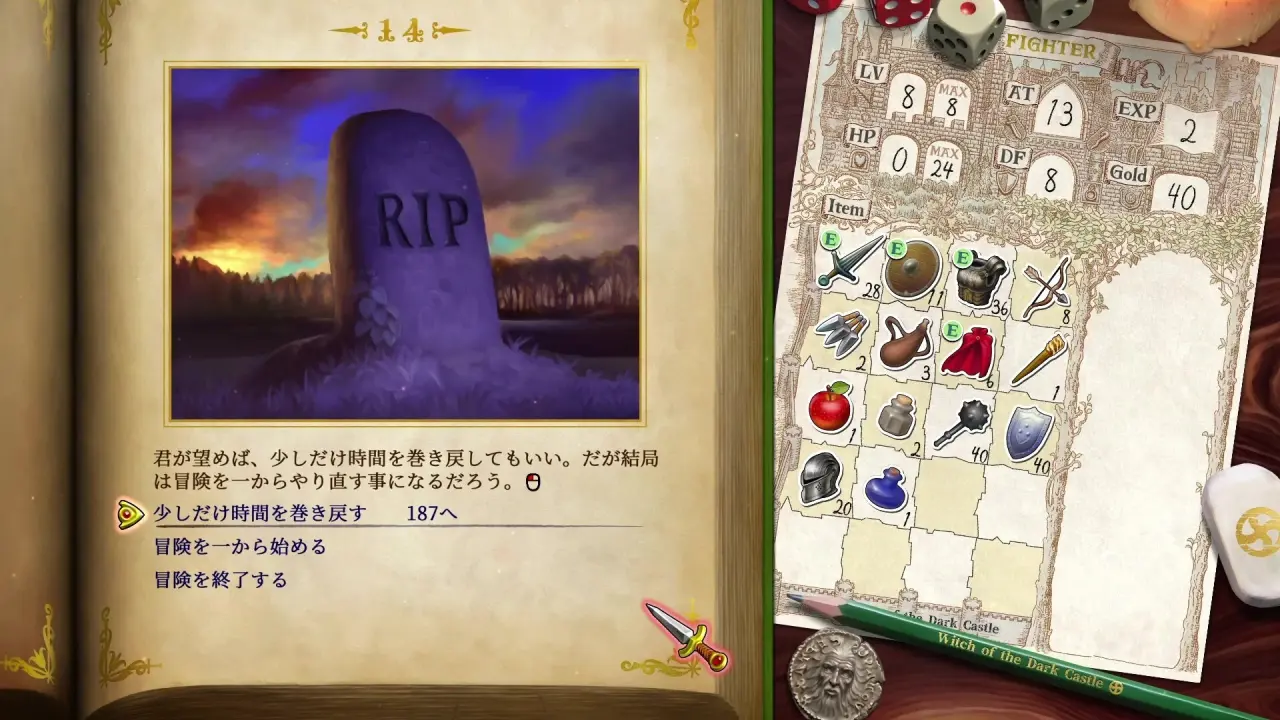
Something like “Turn to 14” — that, I felt, mustn’t be changed. It’s the part where people who know gamebooks go, “Yes, yes — this is it.”
The same goes for dying quickly. There are gamebooks where you don’t die quickly, but there really were a lot of gamebooks where you do. So I’ve put that in as well.
(“Turn to 14” — a famous line from the GrailQuest series. When your adventure ends in failure, you’re sent to page 14, where you die.)
“Turn to 14” is like what we’d now call an internet meme, isn’t it?
Nishimura:
The middle of an adventure is hard. But when it ends, it feels good. I treasure that sensation, too. If you can see it through to the end, I think it becomes a fun, satisfying experience.
As for what I changed: because it’s digital, you can save. Music plays. There’s voice. There are effects. Wherever it could be made lavish, I made it lavish.
The fact that things like your HP notes are managed automatically is a big deal, too. With a paper gamebook, you have to keep rewriting the sheet by hand.
Nishimura:
That’s a strength of digital. But I wanted to keep the sense of playing a gamebook. I’m grateful to gamebook culture, so I have this wish that people who play this will go on to pick up paper gamebooks again, too.
That’s why I didn’t want it to be just a text adventure. I wanted an experience as if you were playing a gamebook. I want to convey: this is, at its root, a digitized version of the thing called a gamebook.
Is the difference from a visual novel found in that sense of “reading a book”?
Nishimura:
Yes. As a pure system, I think it is a variant of the text adventure and the RPG. But I swung the presentation all the way over to “a book.”
A typical adventure game often has you view the world from your own viewpoint. Witch of the Dark Castle is first-person too, but what you’re looking at is a book on a desk. The player is, throughout, reading a book.
So even with a lot of text, it’s natural — because it’s a book.
And even if the pictures don’t move much, it’s natural — because it’s a book.
In this game, I place enormous importance on that… though getting people to think “Ah, I see!” really doesn’t come across unless they actually play it.
300-Plus Illustrations, a 20-Hour Epic — and Still “Just a Hobby”
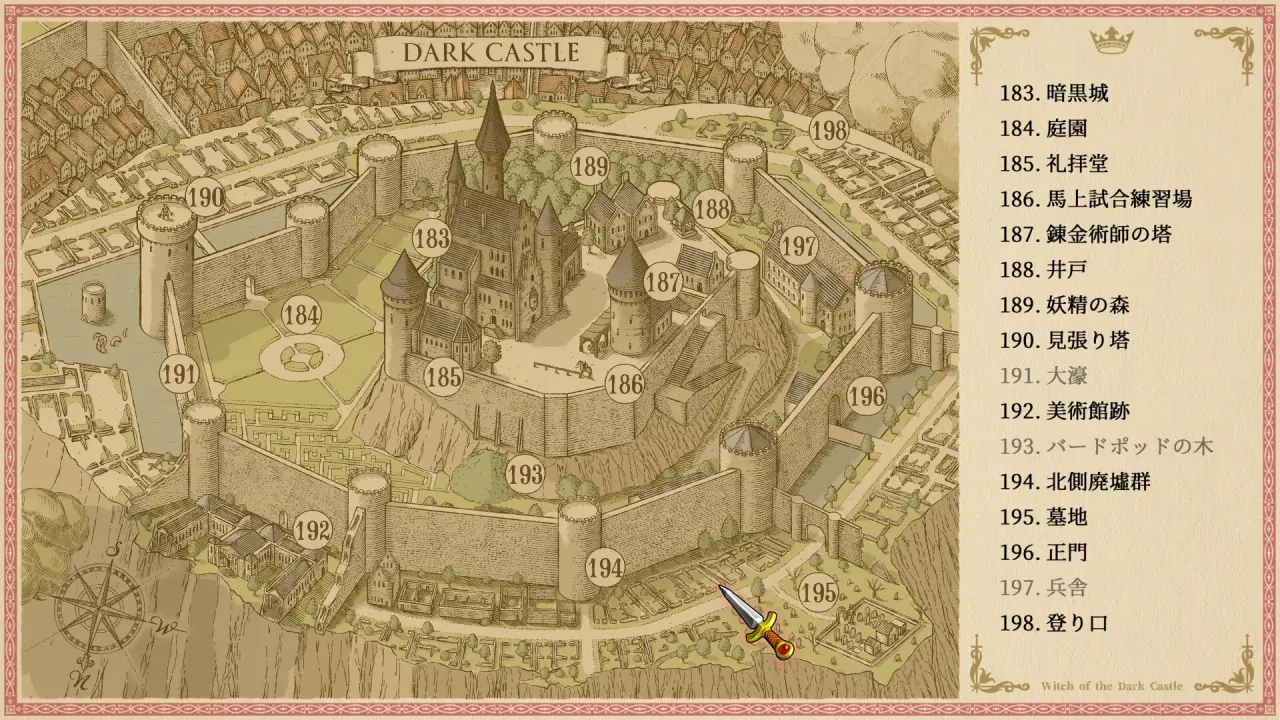
I hear there are more than 300 illustrations this time.
Nishimura:
Including the small ones, there are over 300 pieces of art that actually appear in the finished game, and all of them are ones I drew alone, little by little. I’d draw them only once I’d decided, while making the game, “this is needed,” so there’s almost nothing that went unused.
For the first three years, I’m told, there wasn’t even an engineer — you just kept stockpiling the scenario and the art you needed.
Nishimura:
Looking back, I was working away alone, silently, to a degree where I can’t even tell what I meant to do with it all. At first I had no plan or prospect for shaping it into a game; I was simply drawing and saving it up.
With no exit decided, how were you able to keep going?
Nishimura:
All I can say is that it was fun. I think it was a hobby.
Also, one of the things that got me started on this work was a topic I came across on X (formerly Twitter).
A witch in the forest takes in an orphan, and the child grows up into a muscular, handsome man. The boy adores the witch like a mother, but since they aren’t related by blood, there are also feelings like those of a lover. There was a manga or novel along those lines being talked about.
When I saw it, I couldn’t quite grasp that feeling. These two looked like nothing but parent and child to me. So, then, what would it take for it to become romantic love? I started writing Witch of the Dark Castle meaning to turn that into a story.
At first, it was an inquiry to understand the structure of an emotion.
Nishimura:
That’s right. I think it began from curiosity. Of course, I’m sure I also had the wish to finish it someday and have someone play it. But basically, I was writing because I loved it.
Gamebooks have a thickness to them, don’t they? Open the pages, and all sorts of characters appear. Figuring out how I could create that richness myself was fun. It might be a bit obsessive of me, but I got completely swept up in it.