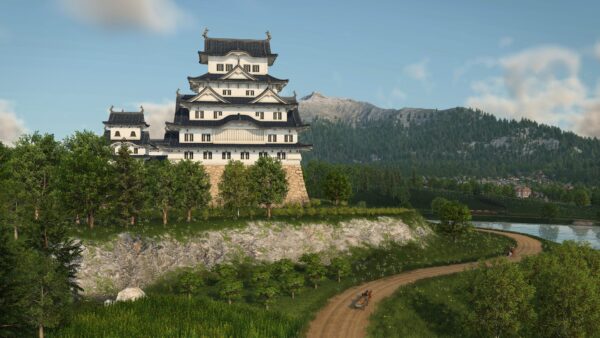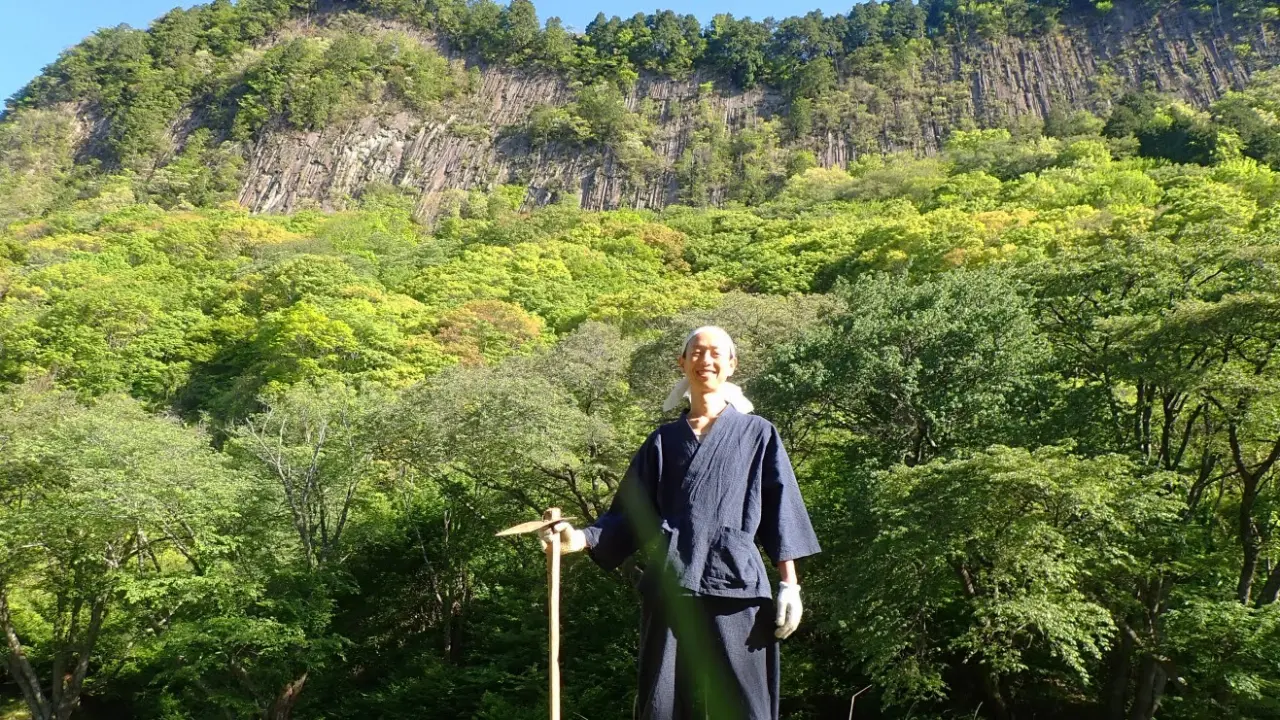
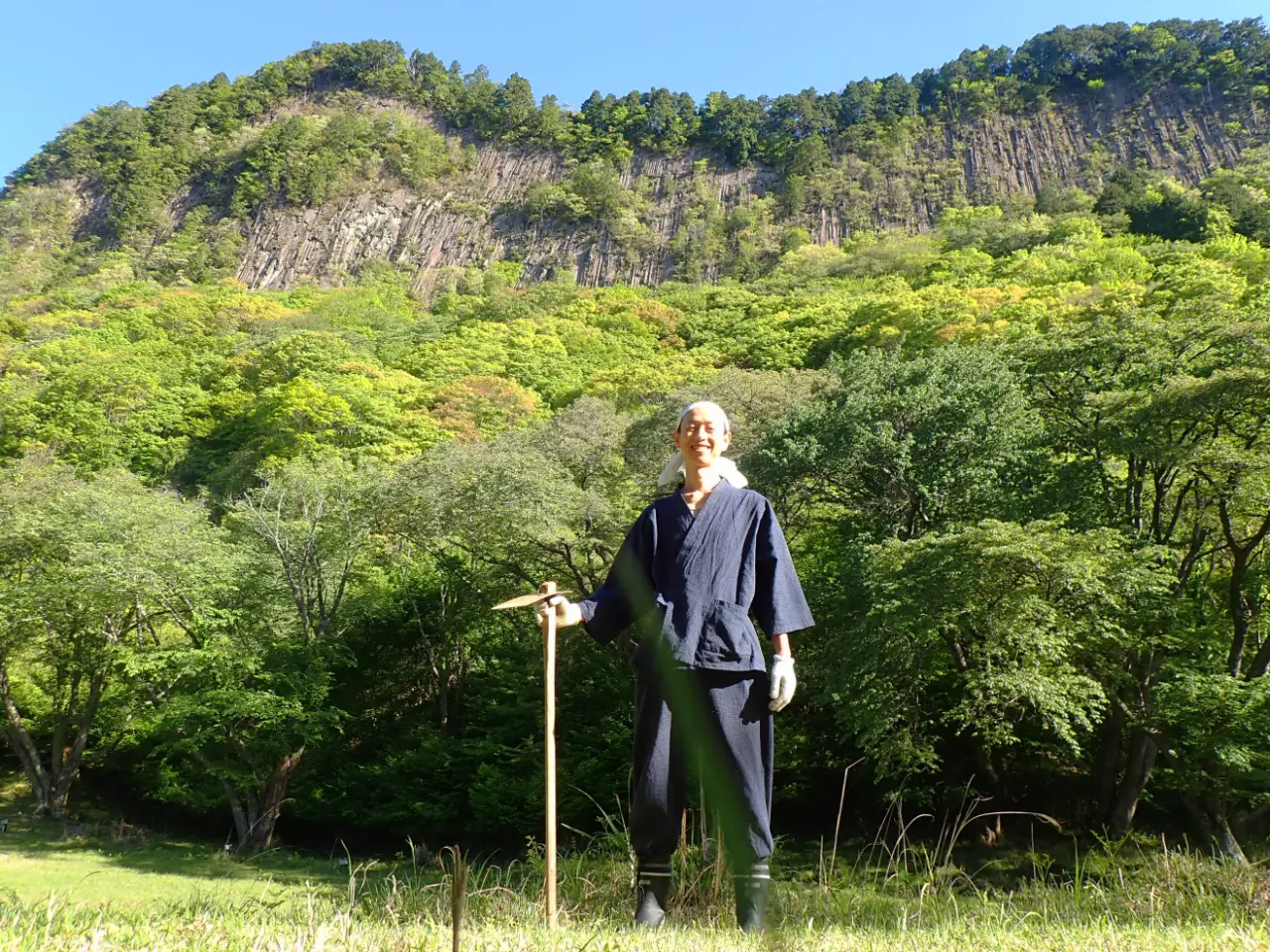
Soni Village, Uda District, Nara Prefecture, Japan.
In a small village of about 1,200 people, with only a single traffic light, one game craftsman spent six years building a certain indie game.
Yoshio Nishimura.
Fresh out of school, he joined Capcom, and after working on titles such as Street Fighter III, Capcom vs. SNK, and Dungeons & Dragons: Shadow over Mystara, he ultimately served as chief of background art on Monster Hunter.
At 31, he left Capcom and joined George Kamitani as the “eighth member” of Vanillaware. From Odin Sphere through 13 Sentinels: Aegis Rim, he led the background team for more than twenty years.
(George Kamitani — president of Vanillaware. After directing Princess Crown (1997) during his time at Atlus, he founded its predecessor company, Puraguru, in 2002, then reorganized it into Vanillaware in 2005. He has overseen a body of work — including Odin Sphere, Muramasa: The Demon Blade, Dragon’s Crown, and 13 Sentinels: Aegis Rim — known for its meticulous hand-drawn 2D visuals and strong authorial voice.)
In other words, behind the charismatic creator George Kamitani, Nishimura was the man who effectively shouldered a significant part of Vanillaware’s visual side.
And that very man left Vanillaware.
The reason wasn’t a negative one — during the COVID-19 pandemic he made up his mind and moved to a mountain village in Nara, and came to love it so much that he could no longer bring himself to commute to the office.
Kamitani, too, sent him off not as a “firing” but as a “graduation” — sotsugyō, a Japanese word often used for a positive, mutually agreed parting rather than a resignation or dismissal.
If anything, this is something Kamitani has been deliberately engineering as part of Vanillaware’s long-term strategy: a movement in which creators like Nishimura eventually strike out on their own, noren-wake style — the old Japanese custom by which a master craftsman lets a proven apprentice open their own shop under a related brand. Nishimura, the story goes, is the first of them.
The first work from Digitalis Publishing, the label Nishimura founded after going independent, is the game at hand: Veritas Tales: Witch of the Dark Castle.
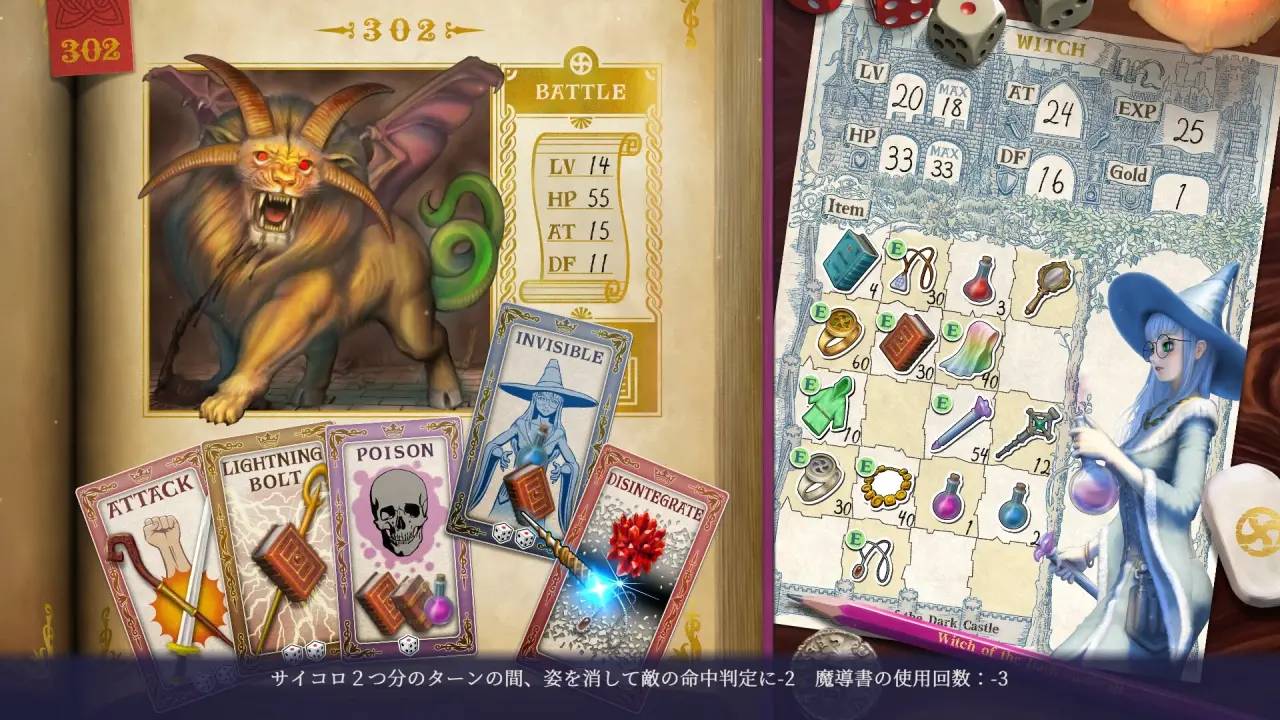
It’s an extremely niche, deeply idiosyncratic passion project: a reconstruction of the “gamebooks” that flourished in the era before the NES in a modern digital environment.
But at the same time, it is the first test case of a “new initiative” that Kamitani envisions for Vanillaware — a long-term strategy of sending directors out into the world without the company’s name on their shoulders, much like a ramen shop granting an apprentice their own branch.
Why does a man who worked on titles like Monster Hunter and 13 Sentinels: Aegis Rim keep making games out in a farming village? We set out to listen to the voice of a craftsman standing at the margins of the games industry.
Interview, text, and editing: TAITAI
The Year the Bubble Burst, and There Were Only Two Job Postings
First, let me start with the basics: who is Yoshio Nishimura, and how did you end up in the games industry in the first place?
Nishimura:
My story begins with the collapse of the economic bubble (Japan’s asset-price bubble, which burst in the early 1990s). I was studying illustration at the Osaka Designers’ Institute (a vocational design school), and the year I graduated, the school received only two job listings from companies in total. The year before, there had been more than a hundred.
That’s a brutal start.
Nishimura:
I was staring down the very real possibility of not landing a job anywhere. That’s when a friend told me, “Capcom is hiring.” I’m from Uwajima, in Ehime Prefecture, and I’d come all the way to Osaka because I wanted to draw — so if I couldn’t find work, I had nothing to fall back on. I applied like a drowning man clutching at straws, and somehow I got in.
Did you actually like games?
Nishimura:
I’d loved games for as long as I could remember.
But I never imagined I’d become someone who makes them. It was more that I figured, as long as I could get a job where I got to draw, that would be enough.
And the person interviewing you on Capcom’s side was Yoshiki Okamoto, I hear.

(Yoshiki Okamoto — a former senior managing director at Capcom. He produced countless hits, beginning with Street Fighter II, and drove the company’s golden age through the 1990s. After leaving Capcom in 2003 he founded Game Republic, and in recent years he has also become active as a YouTuber.)
Nishimura:
That’s right. Okamoto was there for the second round of interviews — and it was wildly entertaining.
Three of us were interviewed at once, and he kept throwing challenges at us. He set up this back-and-forth where you had no choice but to make the case for how interesting you were, how useful you could be.
What was it like, specifically?
Nishimura:
Whenever someone gave an answer, he’d create this atmosphere of, “The next answer’s going to top that, right?” I ended up telling embarrassing stories about myself that I’d never normally share. At one point he practically shouted, “You — you’re hired!!!” right there on the spot, with enough momentum that the people around him had to rein him in.
But it really was fun. It got me fired up, too. It was the kind of interview that made you think, “I have to sell myself even harder.” And it left me certain: “I absolutely have to work for this company.”
So even though you hadn’t originally set out to join a game company, Okamoto’s interview made you want to join Capcom?
Nishimura:
Yes. At first my attitude was just, “As long as I can draw.” But after meeting Okamoto, it was Capcom all the way. I came to feel, “This is where I want to work.”
Once you joined Capcom, what was your first job?
Nishimura:
Cyberbots. I handled the objects in the robot-themed backgrounds, the cockpit UI, the hit-point display, the demo sequences, and so on.
Back then, though, I wasn’t especially good at drawing. So even when I made pixel art, I was the kind of guy whose boss would say, “Nishimura, your art, well…” (he laughs ruefully).
Wait, really?
Nishimura:
The one thing I was good at was anything that moved. Breaking objects, animated elements — I was always making that kind of motion within the backgrounds.
So I got to handle animation and UI in general, and on titles like Street Fighter III I even made things like the bonus stage where you smash up a car.
So even though your position was background artist, you were doing all sorts of things.
Nishimura:
That’s right. There was a strong sense of everyone building the game together. Even as an artist, there was a culture of freely speaking up about the game’s content. So as long as you raised your hand, you’d get to try all kinds of things.
The titles I worked on include Dungeons & Dragons: Shadow over Mystara, SNK vs. Capcom and Capcom vs. SNK, Tech Romancer, Power Stone, and Street Fighter III. And the last title I was involved with — well, Monster Hunter is probably the one I’m best known for.
The Capcom Years: A Kind of Youth, and What I Gained There
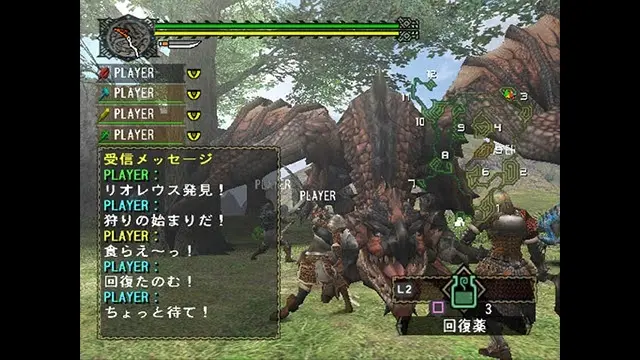
On Monster Hunter, what was your role?
Nishimura:
I was the main chief of background art. I was also given a fair amount of say over the game’s systems.
Oh? What kinds of proposals did you make, specifically?
Nishimura:
The easiest example would be the map design.
Originally, we’d been trying to build large, open-world-style stages, but that was extremely difficult on the PlayStation 2 of the time.
On top of that, Capcom was thinking in terms of a multi-platform framework — being able to develop for several consoles at once. Nintendo’s hardware, Sega’s Dreamcast, and so on. If you try to build for the lowest common denominator across all that hardware, your texture budget and memory both end up quite constrained.
So I judged that large stages were out of the question. Instead, we’d break things into small stages and link them together.
That’s a pretty fundamental part of the game.
Nishimura:
Looking back now, that’s certainly true. The wyvern went to the watering hole; now it’s moved to the northern plains — you track it while checking the map. That’s the kind of game we set out to make.
Did artists at Capcom back then really have that much authority to decide game content?
Nishimura:
Though I doubt it was like that across the entire company.
Part of it was that the team’s planner was a junior of mine, and a big part was that I’d been on that team since early on.
I don’t know how it is now, but back then Capcom had an atmosphere where everyone chimed in on game design. And Okamoto, who was at the top of development, had this philosophy: “Anyone can come up with an idea — what counts is sheer numbers.”
How to put it — if you imagine a hierarchy within the development team, the sense was: programmers at the top, the artists below them, and the planners at the very bottom.
(In Japanese studios of that era, “planners” were roughly what the West would call game designers.)
Planners at the very bottom — that’s fascinating. Usually it seems to be the other way around.
Nishimura:
Say there’s some operation that’s hard to program. Doing it might introduce bugs, and it might cost a great deal. A programmer is well placed to judge that.
It’s the same for the artists. Saying “make 500 pieces of equipment” is easy, but actually creating them is grueling. So the artist can push back with an alternative: maybe we can pull it off through recoloring or swapping out the underlying materials.
Ah, I see — so if the planners sit too far upstream, you end up with these awkward situations where people have no choice but to do it?
Nishimura:
Exactly. In other words, what matters is a vibe where the people who take the most time and bear the most cost can speak up forcefully.
They didn’t have complete authority, of course, but there was an atmosphere where the people on the ground could make the call and change how something was built.
That’s a real strength of the front lines. The plan isn’t absolute; the people who actually build it can say “that’s impossible” or “we could do it this way.” And as a result — in a good sense — the plans become disposable, something it’s fine to throw away?
Nishimura:
That’s right. For better or worse, there was a strong drive of “whatever it takes to make a fun game.” There were arguments, too. But I think everyone was highly motivated.
“I’d Like to Believe That If You Have Fun Making It, the Players Will Have Fun Too”
If you had to name one thing you learned at Capcom, what would it be?
Nishimura:
What stuck with me was something of Okamoto’s that I heard secondhand from my boss.
“When you have fun making something, you’d like to believe the players will have fun too — wouldn’t you?”
It’s that “like to believe” — the wishing in it — that I love so much.
As for the atmosphere at the company, there was plenty that was hard. There were nights spent sleeping at the office, and plenty of work sent back for redos. Making games takes time, there’s pride on the line, and you have to push past your own limits.
But my seniors did their best to keep things enjoyable for us. We’d all get together and buzz about it: how do we make this fun, how do we make it cool?
That sounds like a wonderful environment.
Nishimura:
So my memories of the Capcom years carry a certain springtime-of-youth quality. Making games joyfully — creating that atmosphere might have been the single biggest thing I learned.
On the other hand, you did end up leaving Capcom. Why was that?
Nishimura:
This gets a little dark, but there was a period when people kept leaving.
Okamoto left, the internal structure changed, and a lot of people quit. There was a stretch where the whole atmosphere shifted.
As a company grows, situations like that are probably unavoidable…
Nishimura:
Maybe so. This was just my own gut sense, but the mood shifted away from the fun of making games toward being chased by schedules, chased by quality.
When I joined a new project, I let the stress build up, took the team’s problems on as if they were all my own responsibility, and ended up wrecking my health. My boss told me, “Don’t worry about it,” but I’d hit my limit.
I see.
Nishimura:
And besides, Monster Hunter was just too big. It was grueling, but it was truly good work.
My boss even said it was “the most fun he’d had since joining the company” — that’s how good it was. I think I got to do the best work, with the best team. It’s just that it was too big.
Too big — in what sense?
Nishimura:
If I’d stayed at Capcom, I might have ended up surviving only as “the guy who makes Monster Hunter.”
I was afraid I might end up saying, “This is all there will ever be.” My health was shot, too, so I decided to step away once and try something different.