The Meaning Folded into the Name “Digitalis Publishing”
Tell us about the label’s name this time, Digitalis Publishing, as well. To begin with, what is “digitalis”?
Nishimura:
The first time I learned the word “digitalis” was through a PC game by Hummingbird Soft called Laplace no Ma. Digitalis shows up there as a medicine that raises your stamina. It’s also a cardiac stimulant.
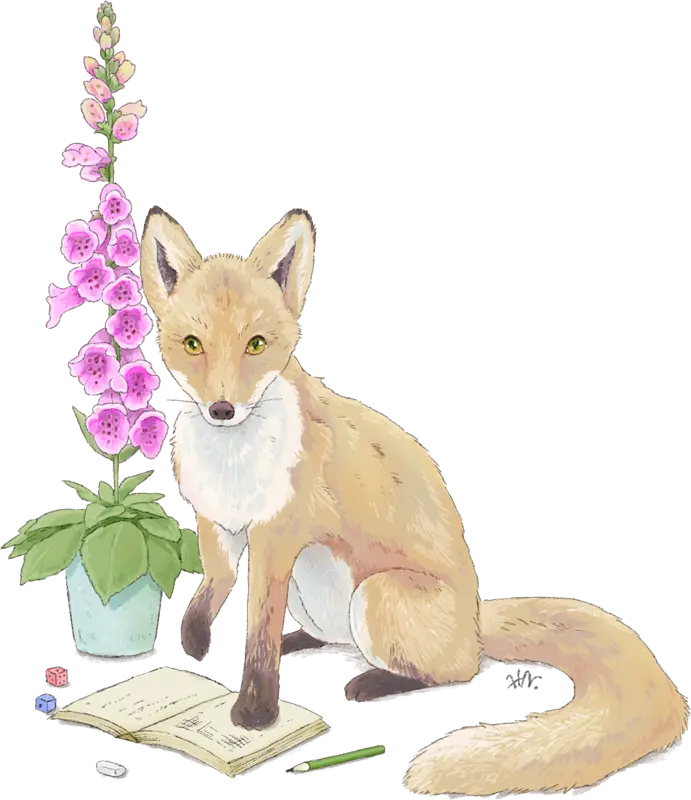
In reality it’s a plant — the foxglove. In Japanese it also goes by names like “witch’s hat” and “fox’s glove.” The word “digitalis” itself is also related to the word for “finger.” And it has a close etymological kinship with the word “digital.”
(Digitalis is the botanical name of the foxglove; it derives from the Latin digitus, “finger” — the same root as “digital.”)
The things I make tend to involve witches, or foxes. I want to keep making things like that going forward. And they’re digital, too.
And I truly loved Laplace no Ma. I’m a little obsessed, honestly (laughs). So I settled on the name Digitalis Publishing.
(Laplace no Ma — a horror RPG for PC released by Hummingbird Soft in 1987. With a Gothic worldview drawing on the Cthulhu Mythos and a steep difficulty, it’s known as a cult classic with a fervent following.)
Beyond Witch of the Dark Castle, do you plan to keep making digital gamebooks?
Nishimura:
Yes. In time, I’d love for digital gamebooks like this to gain recognition, and for similar authors to gather around them.
When that happens, I’d like to open up the libraries and tools we’ve built and start a movement of “let’s make these together.”
That sounds like a rather interesting undertaking.
Nishimura:
There are people who insist on paper, I’m sure, and people who’d rather play casually on a smartphone. There’ll be people who want to make short things that finish in an hour or two.
It would be good if people in all sorts of positions could make them. I think it’d be interesting if these could go out onto distribution platforms like Steam and the Nintendo eShop as indie works of a slightly different shape from the usual indie game.
Tending Fields and Making Games in Soni Village
Changing the subject a little — tell us about your life now. Where do you live, and how do you make games?
Nishimura:
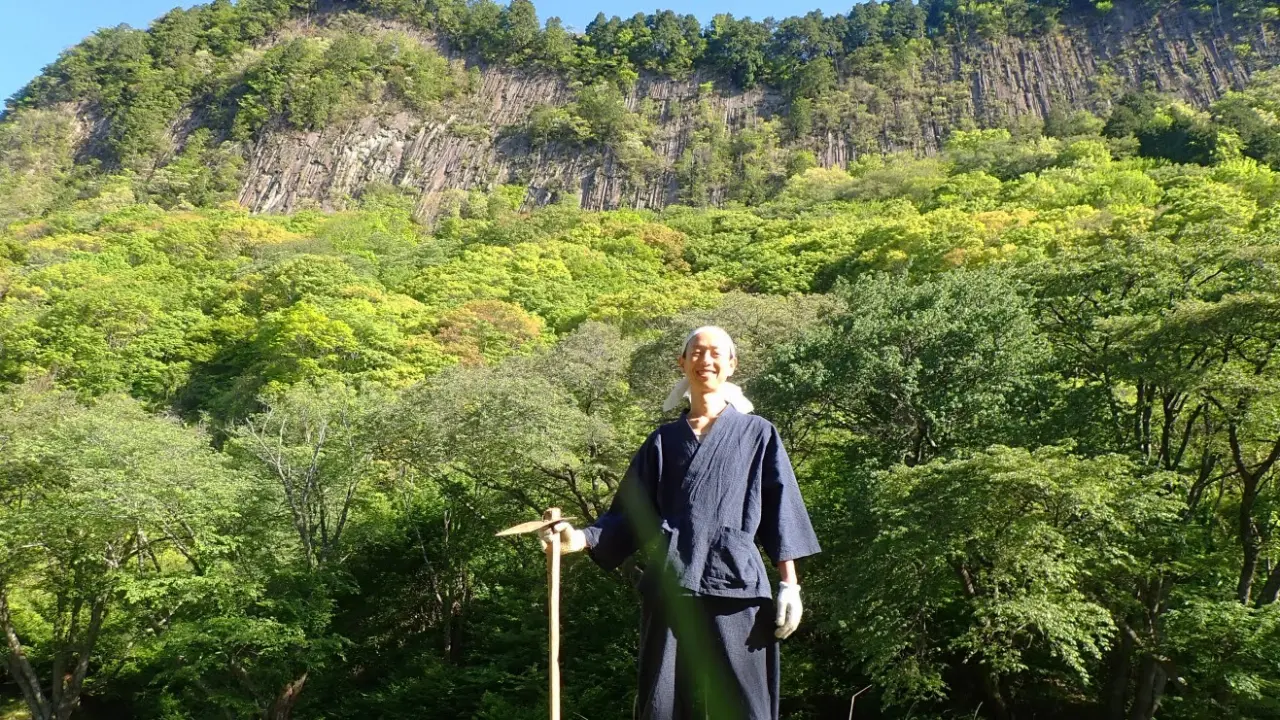
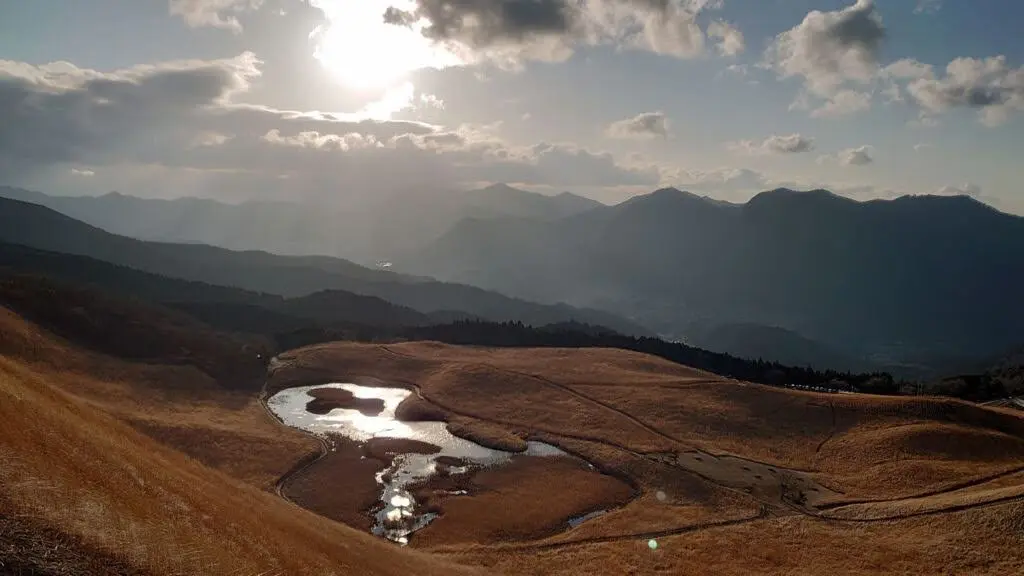
I now live in a place called Soni Village, in Uda District, Nara. It’s a truly small village with only a single traffic light. On paper the population is about 1,200, but I think the number of people actually in the village is a bit smaller. The proportion of elderly residents is high, too.
That said, it’s also a tourist destination. There are places to enjoy beautiful nature, like the Soni Highlands and Byōbu-iwa. There’s an association called “The Most Beautiful Villages in Japan,” and we’re one of its members. Autumn here is truly lovely.
Why Soni Village?
Nishimura:
COVID was the trigger.
I’d originally lived in Osaka, but back then I had this odd sense of crisis — “if I’m in a big city, won’t I be helpless if something ever goes wrong?”
My wife and I talked it over and decided to relocate. And the place she pointed to and said “here” was Soni Village.
That was a bold move.
Nishimura:
I looked for a rental through the vacant-house bank and was lucky enough to meet a wonderful owner. The land was good, too. This is the place, I thought.
In Soni Village there are mountains like Byōbu-iwa and Yoroidake (“Armor Peak”), and they’re exactly like the scenery of Monster Hunter, which I’d worked on. The backgrounds of Monster Hunter take their motif from a place in Scotland called Glencoe. There are mountains of bare, exposed rock — really striking. Soni Village has scenery close to that.
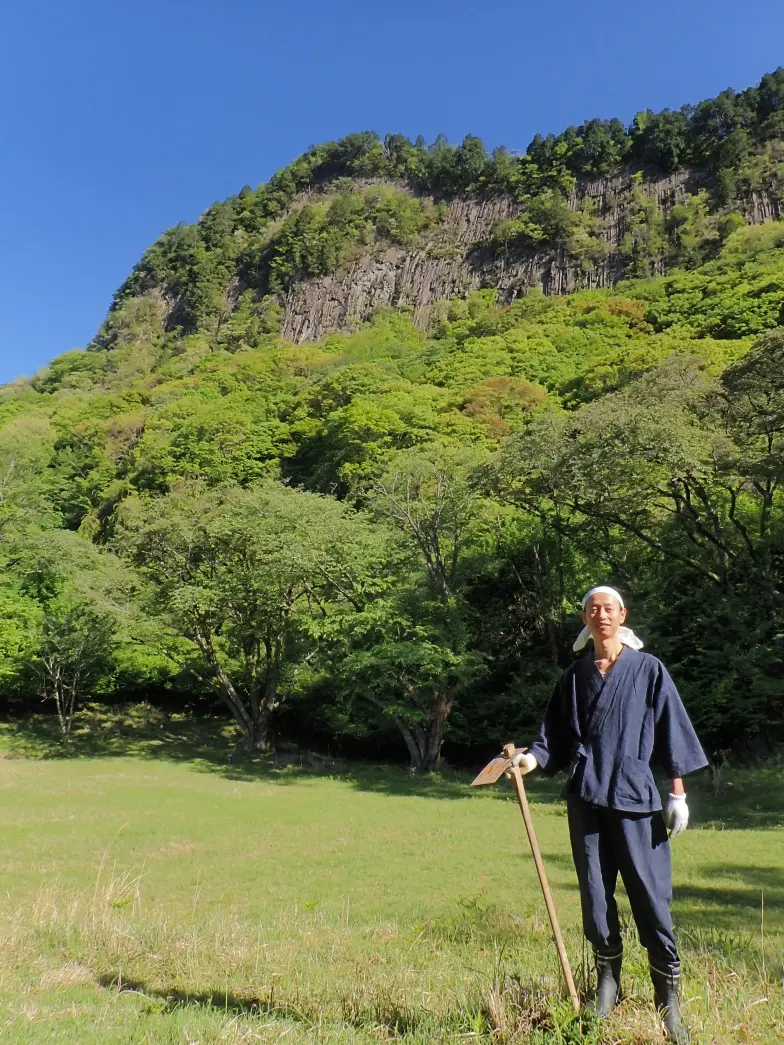
You also do your own farming now, don’t you?
Nishimura:
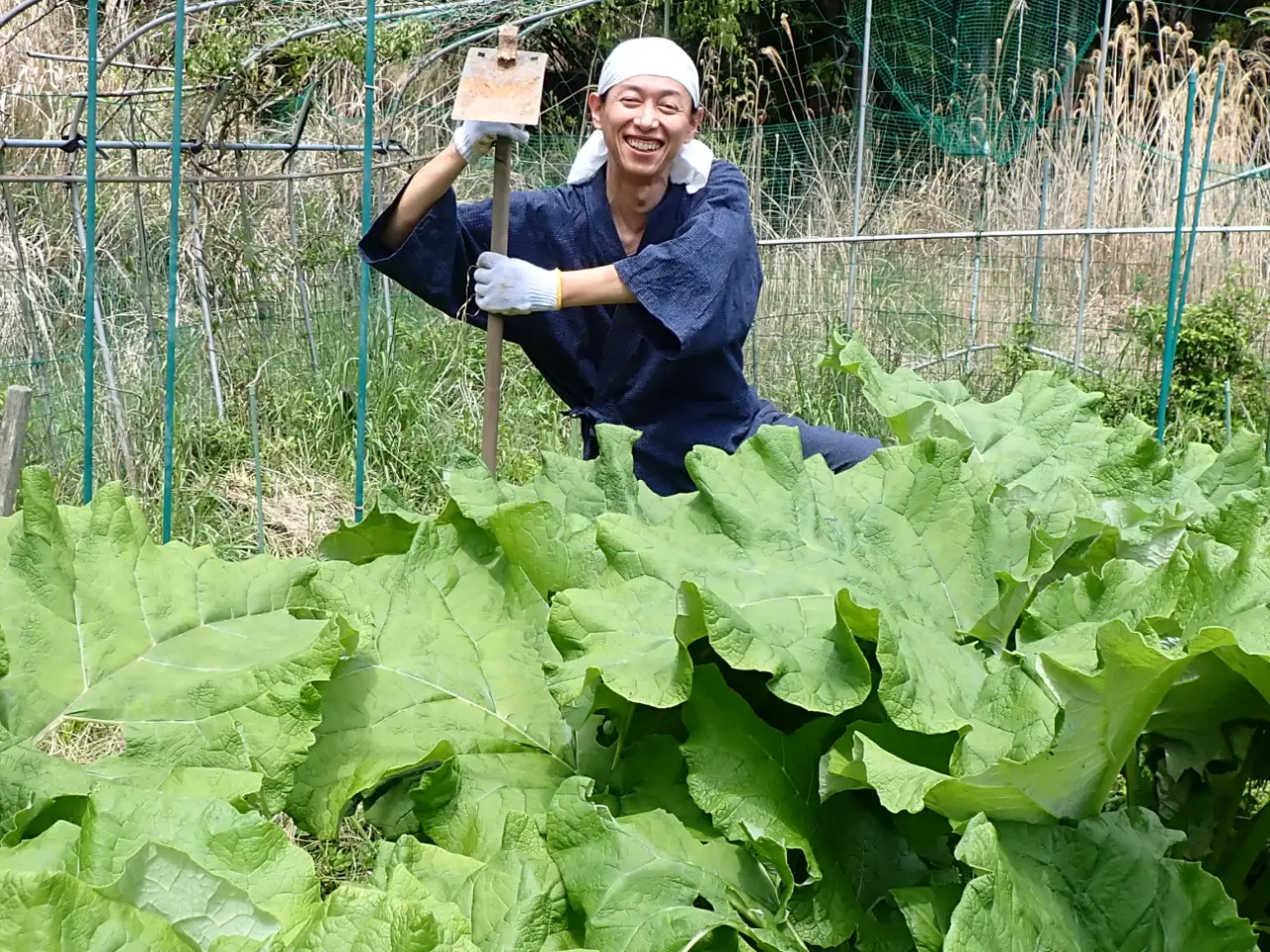
Yes. It’s not quite enough to call self-sufficiency, but I grow vegetables and eat them. It’s “natural farming” — no pesticides, no fertilizer, planting the seedlings right into the waist-high weeds. They grow surprisingly well.
Back when I was a company employee, I’d get up early to do farm work, then start my game work around ten. And I’d do field work on Saturdays and Sundays, too.
Since becoming self-employed, it’s reversed: I do my game work hard on weekends and busy stretches, and farm on weekdays. When the moment comes — the seedlings have grown, the seeds have to go in — I give that priority. I do what I like, when I like.
Is it quite different from commuting to an office to make games?
Nishimura:
Completely different. The stress is different. I genuinely like people, so not getting to see my colleagues is lonely. But there are people in the village too, and being here gives me room to think about all sorts of things.
My health is good, as well. I have almost no aches or pains. Time seems to move more slowly. The sun goes down, the insects sing, a deer passes right by, and there are tanuki (raccoon dogs) too. Mountain songbirds come to the deck of the house. When you cherish things like that, your heart grows rich.
It really is “sunny-day farming, rainy-day game-making” — a twist on the old phrase “sunny-day farming, rainy-day reading.”
(The old phrase is seikō udoku — “tilling the fields on fair days, reading on rainy days,” an idiom for a serene life lived close to nature. Here it’s reworked into “sunny-day farming, rainy-day game-making.”)
Nishimura:
Back when I was in the city, it was just back and forth between office and home, and before I knew it I’d think, “Oh — the cherry blossoms are already over.”
But now I can feel the four seasons. I’m properly looking at something, and feeling something. I think that’s been good.
For Lifelong Gamebook Fans, and the Young Who’ve Never Known Them
Finally, a message for your readers and players, please. Could we have one for longtime gamebook fans, and one for young people who don’t know gamebooks, separately?
Nishimura:
For those who loved the gamebooks of old, I think you’ll enjoy the surprise of “oh, so that’s where they used this,” along with the nostalgia and the new twists.
There are plenty of in-jokes that people who played back then will get. I made this precisely for you — and for me — so I’m confident it won’t disappoint you. I’d love for you to play it.
For those who don’t know gamebooks, it might look a little nerdy, a bit niche. But I think it’s an experience that seems common yet really isn’t.
Where exactly is it an experience that “really isn’t” common?
Nishimura:
It’s the part where it’s a game that especially makes you use your imagination.
A situation is described, and you make a choice. In that moment, a person predicts the future: “what’s going to happen next?”
Then you find out whether you were right or wrong. This is something we do in daily life too, but doing it deliberately as a game lets you feel just how much you live by using your imagination.
Imagination — that’s certainly one way to look at it.
Nishimura:
Why did gamebooks catch on long ago? It’s simply because they were fun.
These days, because of cultural circumstances and the state of the publishing industry, they may not have spread the way they did back then. Part of it, I think, was that the sheer number of titles grew too large.
But in essence, they’re fun. People who feel that way must still be out there — just waiting to be reached. So I really want people to pick it up, just once, and give it a try.
Also, I hear you’re positive about video streaming of this game — why is that? With a story-centered game, there’s a concern that being watched on stream dilutes the point of playing it yourself.
Nishimura:
As I said earlier, a gamebook has the experience of “what would you do?” at its center, right?
Watched on a stream, that becomes “what would that streamer do?” A cautious person proceeds cautiously; a deeply curious one opens the dangerous door. The efficiency-minded pick the safe road. The choices mirror that person’s character.
I think the experience differs between when you play it yourself and when someone else plays it.
So streaming isn’t merely a spoiler — it becomes a place to watch “someone else’s choices.”
Nishimura:
Yes. This game is packed with all kinds of events and choices. So, honestly, I don’t think many people will see every route the game has to offer.
For example, in a stream of an action game you can see the player’s skill and reactions, and in a competitive game the speed of their decisions and the mind games are fun to watch. So in a stream of this game — a gamebook — what is there to see, and what makes it fun?
Nishimura:
Probably the fun is in seeing that person’s leanings. Do they avoid danger, or step into it? Do they trust a stranger, or doubt them? Do they choose by profit and loss, or by feeling?
So watching someone else’s stream is fun, I think — and if you can, watching another person’s playthrough after playing it yourself would be even more enjoyable.
I went right here. That person went left. I helped them. That person abandoned them… and so on.
In that, I think, lies the old-and-new appeal of the gamebook as a form. (End.)
Gamebooks Are Fun Because You Get Lost
After finishing the interview, one thing stayed with me, strongly.
Witch of the Dark Castle is by no means a work that merely says, “We’ve made gamebooks convenient and easy to follow, as a modern game.”
Quite the opposite. It’s a work that deliberately leaves the unfairness and the inconvenience in.
The unfairness of dying instantly. The labor of reading the text and having to picture the situation in your own head. That “pause” where you must stop, just once, before pressing a choice.
In a modern experience or UI design, those things get shaved away — smoother, more comfortable, so you never get lost.
But the appeal of a gamebook lies in that very act of getting lost, Nishimura says.
Because you get lost, it becomes a choice. Because you choose, failure carries meaning. Because you fail, there’s meaning in trying once more.
Listening to Nishimura, you come to feel that the gamebook, as a form, isn’t simply a retro pastime — it’s a device for recovering the “weight of choice” that games originally possessed.
And the life of the man who makes them, too, you could say, has been an accumulation of choices.
Go to Capcom. Quit. Go to Vanillaware. Keep drawing. Pass the lead to a junior. Move to Soni Village. Till the fields. Make an indie game.
Not one of those choices quite follows a rational career path. But on rationality alone, a work like Witch of the Dark Castle probably wouldn’t be born.
A gamebook begins the moment you open the page. And the one who chooses is always the reader.
Whether Witch of the Dark Castle is fun, too, will in the end be for players to choose. But at the very least, the story of how this work came to be is quite a fun one.
Because this is a work that lies at the end of a rather unusual branch — one fork in the larger choice of “making games for a living.”